Travertine is a natural limestone formed by mineral springs, most famously in central Italy around the town of Tivoli. The stone has been quarried and used in buildings for over two thousand years: the Colosseum in Rome is largely travertine, as are many of the great buildings of the Renaissance. In domestic tile applications today, travertine is valued for its warm, creamy tones, its distinctive open pores and veining, and the organic variation between tiles that no manufactured product can replicate.
It is also a material that requires some understanding before you commit to it. Travertine tiles behave differently from porcelain, they need sealing, and the maintenance expectations are different. This guide covers everything you need to know to decide whether travertine is the right choice for your project and, if so, how to use it well.
What it is
What is travertine?
Travertine is a sedimentary rock, specifically a form of limestone, deposited by mineral-rich spring water. As the water evaporates, it leaves behind layers of calcium carbonate that compact over thousands of years into the stone we quarry today. The process creates the travertine’s characteristic visual features: the distinctive open pores and cavities left by trapped gases and organic matter, the warm colour range from creamy white through honey and walnut to a deep red-brown, and the layered veining that runs through every tile differently.
Most travertine sold in the UK comes from Turkey, which has large, commercially viable deposits of high quality stone, alongside smaller quantities from Iran, Mexico, and the original Italian deposits near Rome. The origin affects colour and consistency: Italian travertine tends to be more uniform and pale; Turkish travertine is more variable with a wider colour range. Ask your tile showroom about provenance if consistency across a large floor area matters to your project.
Travertine is a natural material. Every tile is different. The variation between tiles is not a defect, it is what the material is. Order a sample before committing and view several tiles together to understand the range of variation in the batch.
Finishes
Travertine tile finishes
Travertine is available in several surface finishes, each of which gives the stone a different character and determines where it can be used:
Tumbled
Tiles are literally tumbled together to round and chip the edges, producing a worn, aged appearance. The most rustic travertine finish, with unfilled or partially filled pores. Very popular for outdoor terraces, garden paths, and traditional-style interiors. Its surface texture also provides good grip underfoot. The “travertine tumbled tile” that many customers search for specifically is this finish.
Honed
A smooth, flat surface with a low sheen. The pores in the stone are usually filled with grout or resin before honing, creating a surface that is smooth to the touch but not reflective. This is the most popular travertine finish for modern interiors: it has the warmth and variation of the natural stone without the rustic character of tumbled or the high maintenance of polished.
Polished
Ground and polished to a high reflective sheen. Polished travertine is beautiful in formal settings and makes a room feel light and spacious. The practical trade-off is maintenance: polished stone shows scratches and water marks more readily than honed or tumbled, and the polished surface requires regular cleaning and periodic repolishing in high-traffic areas. Not recommended for bathroom floors.
Brushed
The surface is worked with wire brushes to give the stone a slightly textured, aged finish that is softer than tumbled but less smooth than honed. A good compromise between character and practicality. Brushed travertine has enough surface texture to provide reasonable grip on floors without the pronounced weathered look of tumbled.
Chiselled edge
Not a surface finish but an edge treatment: the edges of the tile are chipped and broken to give a natural, uncut appearance. Often combined with tumbled or brushed finishes. Chiselled edge travertine has a pronounced rustic character that works well in outdoor settings, Mediterranean-style gardens, and traditional interiors.
Cross cut vs vein cut
Cross cut travertine is cut across the veining, producing the characteristic cloud-like pore pattern most people associate with the stone. Vein cut is sawn with the veining, producing straighter, more dramatic lines similar to marble. Vein cut travertine is more expensive to produce and tends to have a more formal character. Both are available in multiple surface finishes.
Where to use it
Using travertine in your home
Bathroom floors
Travertine is a traditional choice for bathroom floors and it works well when specified correctly. Use a honed finish rather than polished: honed travertine provides better grip underfoot and does not show water marks as readily. Fill the pores before installation in a bathroom floor, as unfilled pores will collect soap residue and become difficult to clean. Seal the stone before grouting, and reseal annually. Avoid heavy cleaning products containing acids or bleach: these will etch the surface of the stone.
Bathroom walls
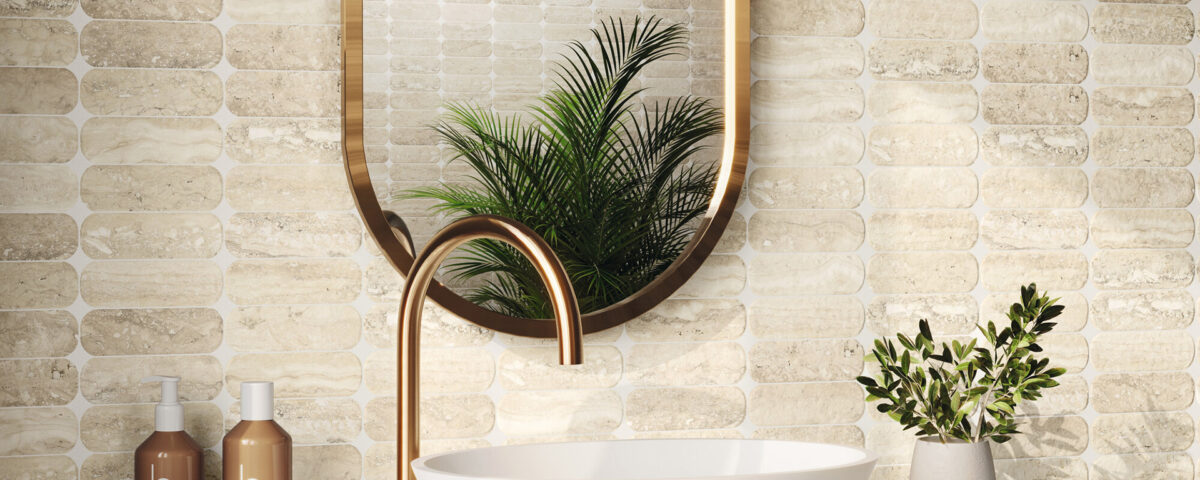
Travertine on bathroom walls, particularly around a freestanding bath or behind a basin, creates a look that no porcelain tile can quite match. The stone has a warmth and depth that reads as genuinely luxurious. Seal the stone and use a silicone sealant rather than grout at the junction with the bath or basin to allow for movement and prevent water ingress behind the tile. Avoid using travertine inside a shower enclosure where it will be permanently wet: the continuous moisture and soap contact are harder on natural stone than on a dry wall application, and the maintenance becomes demanding.
Kitchen floors
Travertine kitchen floors look beautiful and are used regularly in high-end residential projects. They require more maintenance than porcelain: regular sealing (every one to two years depending on use and the sealer product), careful cleaning with pH-neutral cleaners, and prompt attention to spills including wine, coffee, and acidic foods which can stain or etch the stone surface if left. In a family kitchen with young children, the additional maintenance burden is worth considering.
Hallways and living rooms
One of the strongest applications for travertine in a British home. A travertine hall floor sets the tone for the whole house in a way that no manufactured tile can replicate. The honed or brushed finish is the right choice here: practical enough for daily use, warm enough to welcome. Use a consistent sealant and clean regularly with a suitable stone cleaner to maintain the colour and prevent staining.
Outdoor use
Tumbled travertine is one of the most popular outdoor tile choices in Mediterranean countries. In the UK the calculation is more complicated: travertine is not frost-proof in the way that dense porcelain is, and a UK winter can cause a porous travertine tile to crack if water penetrates and freezes. For outdoor use in Devon and the South West, where winters are milder than most of the UK, a well-sealed tumbled travertine on a properly drained patio base can perform well. For the rest of the country or for exposed north-facing terraces, we recommend specialist outdoor porcelain for reliability and low maintenance.
Unsealed travertine in a bathroom or kitchen will stain. The pores in the stone are open channels directly into the tile body, and any liquid, grease, or cleaning product that sits on the surface will penetrate and leave a mark. Seal before grouting, reseal annually in wet areas, and use only pH-neutral cleaners for day-to-day maintenance.
Maintenance
How to maintain travertine tiles
Travertine is not a high-maintenance tile, but it is a tile with specific maintenance requirements. Ignore them and the stone will stain, etch, or dull over time. Follow them and travertine is one of the longest-lasting and most beautiful tile materials available.
| Task | When | Product |
|---|---|---|
| Initial sealing | Before grouting, on new installation | Penetrating stone sealer – apply 2 coats |
| Daily cleaning | As needed | Damp mop only, or pH-neutral stone cleaner. Never vinegar, lemon, or bleach. |
| Resealing | Annually in wet areas; every 2 years in dry areas | Same penetrating sealer as initial application |
| Grout maintenance | As needed | Stone-safe grout cleaner. Avoid bleach-based products. |
| Spill response | Immediately | Blot (do not wipe) and rinse with water. Acid spills need immediate attention. |
What damages travertine
- Acidic cleaners including vinegar, lemon juice, many bathroom and kitchen spray cleaners. These etch the calcium carbonate in the stone, leaving dull patches that cannot be reversed without grinding.
- Bleach and chlorine-based products. These discolour the stone and break down sealers.
- Leaving spills to sit. Red wine, coffee, cooking oil, and fruit juice will all stain travertine if not addressed quickly.
- Abrasive cleaning pads. These scratch the surface, particularly on honed and polished finishes.
Common questions
Travertine tile questions answered
What is a tumbled travertine tile?
A tumbled travertine tile has been processed by literally tumbling the tiles together to round and chip the edges and create an aged, worn appearance. The result is a tile with soft, irregular edges rather than sharp, factory-cut corners, and a textured surface. Tumbled travertine is the most rustic travertine finish and is popular for outdoor terraces, traditional-style interiors, and Mediterranean-inspired garden settings.
Does travertine need to be sealed?
Yes, always. Travertine is a porous stone and must be sealed before grouting and resealed annually in wet areas such as bathrooms and kitchens. Unsealed travertine will absorb liquids, cleaning products, and grease through its pores and stain. Use a penetrating stone sealer, applied in two coats, before any grouting takes place.
Is travertine suitable for a bathroom floor?
Yes, with the right finish and proper sealing. Use a honed or brushed finish rather than polished: these provide better grip underfoot and are easier to maintain. Fill the open pores before installation. Seal before grouting and reseal annually. Clean only with pH-neutral stone cleaners and avoid any acidic or bleach-based products. Well-maintained travertine lasts for decades and improves in character with age.
Can travertine tiles be used outdoors?
In milder climates such as Devon and the South West, tumbled travertine can perform well outdoors on a properly drained base when sealed correctly. In areas with harder winters, travertine carries a risk of frost damage because of its natural porosity. If frost resistance is a concern, outdoor-rated porcelain such as the Grespania Coverlam 20mm range is a more reliable choice.
How do you clean travertine tiles?
Use only pH-neutral stone cleaners and warm water for daily cleaning. Never use vinegar, lemon-based products, bleach, or most commercial bathroom and kitchen sprays: these are acidic or chlorine-based and will etch or discolour the stone. Blot spills immediately rather than wiping them across the surface. For grout cleaning, use a stone-safe grout cleaner rather than bleach-based products.
What is the difference between filled and unfilled travertine?
Unfilled travertine has its natural open pores left exposed, giving the most authentic, rustic appearance but requiring more careful maintenance as the pores can trap dirt and cleaning products. Filled travertine has the pores filled with grout, resin, or cement before finishing, creating a smoother, flatter surface that is easier to clean and maintain. Filled and honed is the most practical choice for bathroom and kitchen floors.
See natural stone tiles at our Exeter showroom
La Fabrico stocks natural stone tiles including travertine, marble, and limestone at our Marsh Barton showroom in Exeter. Our team can advise on the right finish, sealing requirements, and applications for your project. Free samples available. Visit us or call to arrange an appointment. Guaranteed Best Prices.
lafabrico.com | 01392 848487 | Marsh Barton, Exeter EX2 8QX