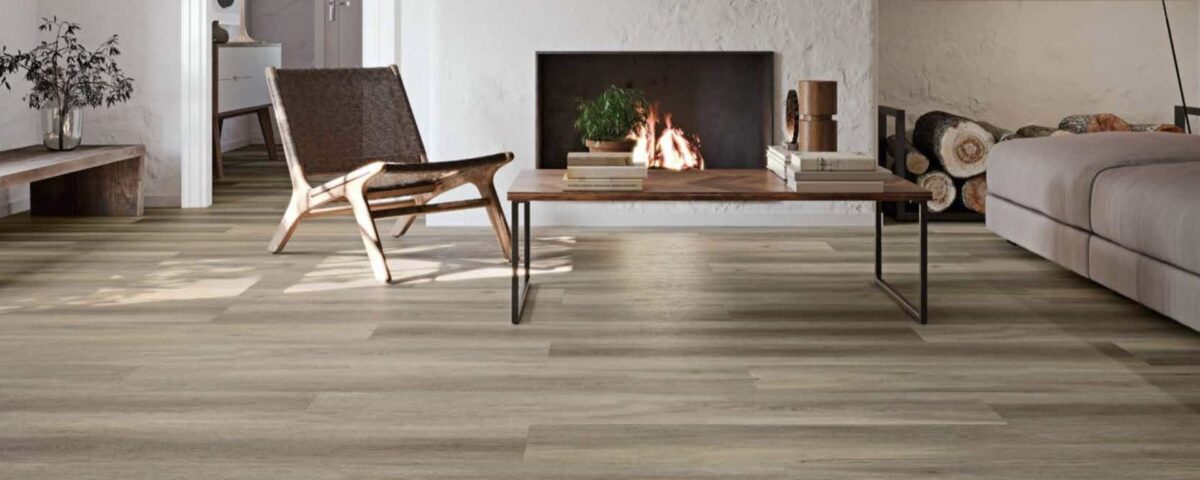
Wood flooring is one of the most universally loved choices in home design. Its warmth, its natural grain, and the way it ages gracefully make it the instinctive first choice for many homeowners. But wood has real limitations, particularly in kitchens, bathrooms, and any room that sees water, heavy traffic, or strong sunlight. Wood effect tiles offer the look of timber with an entirely different set of practical qualities, and modern manufacturing has made them genuinely difficult to tell apart from the real thing.
So which should you choose? This guide walks you through the honest comparison across every factor that matters, then gives you a clear recommendation for each room in your home.
Step 01
Understand what each option actually is
Before comparing them, it helps to be clear on exactly what you are choosing between:
Real wood flooring
There are two main types. Solid hardwood is milled from a single piece of timber throughout its depth, can be sanded and refinished multiple times, and develops a beautiful patina over decades. Engineered wood has a real hardwood veneer on top with a plywood or composite core. It is more dimensionally stable than solid wood, handles underfloor heating better, and can still be refinished a limited number of times. Both deliver the genuine sensory experience of walking on wood: the warmth, the slight give, and the natural variation that only comes from the real material.
Wood effect tiles
These are porcelain or ceramic tiles that use high-definition digital printing and surface texturing to replicate the look and feel of timber. Modern wood effect tiles are extraordinarily convincing, capturing grain, knots, and colour variation with impressive accuracy. They are completely waterproof, highly scratch-resistant, and can be used in rooms where real wood would be at serious risk. At La Fabrico, we carry wood effect floor tiles from leading Italian and Spanish manufacturers alongside our LVT (luxury vinyl tile) wood flooring range, giving you multiple routes to the wood look in any room.
Step 02
Compare them honestly across what matters most
| Factor | Real wood | Wood effect tiles |
|---|---|---|
| Appearance | Genuinely unique: no two boards identical. Ages beautifully over time | Excellent and improving fast. Pattern repeats if you look closely on cheaper ranges; top-end tiles are very convincing |
| Feel underfoot | Warm, slightly soft, comfortable for long periods barefoot | Harder and cooler underfoot. Better with underfloor heating which it conducts excellently |
| Water resistance | Poor. Solid wood will warp, swell, and stain with sustained moisture. Engineered wood is better but still at risk | Excellent. Porcelain is essentially impervious to water. Safe in bathrooms, wet rooms, and kitchens |
| Scratch resistance | Susceptible. Scratches, dents, and scuffs accumulate over time, particularly with pets or children | Excellent. Porcelain is one of the hardest flooring surfaces available |
| Maintenance | Requires periodic oiling, waxing, or resealing. Can be sanded back and refinished | Very low. Sweep and mop. No oiling, sealing, or refinishing required |
| Longevity | Solid hardwood can last a lifetime and beyond with proper care. Engineered wood: 25 to 50 years | Porcelain tiles can last 50+ years with no refinishing required |
| Underfloor heating | Engineered wood: compatible with care and gradual heat changes. Solid wood: limited suitability | Excellent conductor. Ideal choice for underfloor heating systems |
| Cost | Solid hardwood: high. Engineered hardwood: mid to high. Both require periodic maintenance spend | Mid range. Higher-quality tiles cost more upfront but require almost no maintenance spend |
| Where it can go | Living areas, bedrooms, hallways. Not suitable for bathrooms, wet rooms, or outdoors | Virtually anywhere including bathrooms, wet rooms, kitchens, conservatories, and outdoors (in 20mm format) |
Step 03
Decide which is right for each room
The honest answer is that neither option is universally better. The right choice depends almost entirely on which room you are tiling and how you use it. Here is a clear recommendation for each area of the home:
-
Use tiles
Bathrooms and en-suites. Wood effect tiles are the only sensible choice here. Real wood, including engineered wood, is at serious risk from the sustained humidity, steam, and splashing water in a bathroom environment. Modern wood effect porcelain tiles in a bathroom look genuinely beautiful, are completely safe, and need almost no maintenance. Choose a finish with an R10 slip rating for the floor.
-
Use tiles
Kitchens. Wood effect tiles are the stronger practical choice for kitchen floors. A leaking dishwasher, a dropped glass of water, or simply the daily accumulation of cooking moisture presents a real risk to real wood over time. Tiles shrug all of that off without any concern. They are also easier to keep clean in a room that sees regular spills and heavy foot traffic.
-
Either works
Open-plan living and dining areas. This is genuinely a personal choice. Real wood looks and feels exceptional in a living space and brings warmth that tiles are harder to replicate. Wood effect tiles work beautifully too, particularly if you want to run the same floor through from an adjoining kitchen (which real wood cannot do). Consider your lifestyle: if you have young children, dogs, or high traffic, tiles will be more forgiving long-term.
-
Consider real wood
Bedrooms. Bedrooms see almost none of the practical challenges that favour tiles. No water, low traffic, and a barefoot environment where the warmth and softness of real wood genuinely improves daily life. This is where solid or engineered hardwood is at its most compelling and where wood effect tiles have the least advantage.
-
Use tiles
Hallways and boot rooms. High traffic, wet shoes, and muddy paws make hallways one of the hardest environments for real wood. Wood effect tiles are far more robust, easier to clean, and will not show scuffs and scratches the way timber does. A wide-plank wood effect tile in a warm oak or natural timber tone is one of the most popular choices we see for Devon hallways right now.
-
Use tiles
Conservatories and garden rooms. Strong sunlight bleaches and fades real wood over time. Wood effect tiles are completely fade-resistant and can extend outdoors in a 20mm format, creating a seamless flow between your indoor and outdoor spaces that real wood cannot achieve.
The smartest approach for many homes is both: real wood in bedrooms and living areas where it truly shines, and wood effect tiles in kitchens, bathrooms, and hallways where practicality matters most. The two can look beautiful together if you choose complementary tones.
Step 04
Choose the right wood effect tile
If you have decided wood effect tiles are the right choice for your space, these are the decisions that will most affect the final result:
Plank length and width
Longer, wider planks look more contemporary and more convincingly like real wood. A tile of around 200x1200mm or 200x1000mm reads very naturally as a wood plank floor. Shorter, squarer formats can look more tile-like. If replicating the look of real wood as closely as possible is important to you, go long and narrow.
Tone and species effect
The most popular wood effect tiles in 2026 reference lighter, natural timber tones: light oak, warm ash, pale walnut, and natural pine. These complement the warm, earthy interiors palette that is dominant right now. Dark wenge and very red-toned cherry effects have dated considerably and are best avoided if you want a result that will feel current for the next decade.
Laying pattern
The standard brick-bond (offset) laying pattern is the most natural and convincing for a wood effect tile. A herringbone or chevron pattern is a more design-forward choice that works beautifully in hallways and kitchens. Straight stack is the most contemporary option and works very well in larger spaces. Avoid diagonal laying for wood effect tiles: it tends to fight against the linear plank format rather than complement it.
Grout colour
Use a grout that matches the tile tone as closely as possible. For most wood effect tiles this means a mid-warm beige or light brown grout. Contrasting grout emphasises the grout lines and makes the tile look much more like a tile, which is exactly what you are trying to avoid.
We display our wood effect tile range alongside our LVT wood flooring collection in our Exeter showroom, so you can compare them side by side and see both in realistic room settings. Our team can talk you through the practical differences and help you decide which is right for each room in your home.
Step 05
When to choose wood effect tiles: a quick summary
Choose wood effect tiles when
- You want the wood look in a bathroom, wet room, or kitchen
- You have underfloor heating and want the best heat conductor
- You have children, pets, or high foot traffic
- You want to run the same floor from inside to outside
- You want a low-maintenance floor with no periodic oiling or sealing
- You want to carry the same material tone from kitchen into hallway
Consider real wood when
- You are flooring a bedroom or dry living space
- The sensory experience of walking on real timber matters to you
- You want a floor that develops genuine character and patina over decades
- You may want to sand back and refinish in the future
- Acoustic comfort and warmth underfoot are priorities
See both options side by side in our Exeter showroom
We display wood effect tiles and LVT wood flooring together in real room settings, so you can compare them properly before you decide. Free samples available for both. Our team can help you choose the right option for every room in your home. Guaranteed Best Prices.
lafabrico.com | 01392 848487 | Marsh Barton, Exeter EX2 8QX