Walk into any tile showroom for the first time and the sheer number of options is overwhelming. Porcelain, ceramic, encaustic, terrazzo, zellige, natural stone, mosaic, quarry, fluted, large format, wood effect — the terminology alone is enough to make a renovation feel more complicated than it needs to be. But once you understand what each type of tile actually is, how it is made, what it is good at, and where it performs best, the decision becomes considerably clearer.
This guide covers every tile type you are likely to encounter, with a plain-English explanation of each, a practical breakdown of its strengths and limitations, and a clear answer to the question that matters most: which room is it right for? Use the quick reference table at the end if you already know which room you are tiling and want to jump straight to a recommendation.
The Materials
Every tile type explained
Tiles are categorised primarily by their material, which determines their density, porosity, durability, maintenance needs, and suitability for different rooms. Here is every type you are likely to come across:
Porcelain tiles
Porcelain is the most widely used tile material in UK homes, and for good reason. It is made from a refined, dense clay (kaolin) mixed with feldspar and silica, then fired at temperatures above 1,200°C. This produces an exceptionally hard, low-porosity tile with a water absorption rate of less than 0.5%, which qualifies it as frost-proof and suitable for virtually any application indoors or out.
Porcelain can be manufactured to replicate almost any other material convincingly: natural stone, marble, wood, concrete, encaustic patterns, and fabric textures are all produced in porcelain. Modern digital printing and surface texturing have made top-quality porcelain replicas genuinely difficult to distinguish from the real thing at a glance — and considerably more practical to live with.
Ceramic tiles
Ceramic is the original tile material: a mixture of clay, sand, and minerals shaped and fired at lower temperatures than porcelain (typically 900 to 1,100°C). The result is a lighter, slightly softer tile with higher porosity than porcelain. Ceramic tiles are generally less expensive, easier to cut, and available in the widest range of colours and glazed finishes of any tile type.
The glaze on a ceramic tile sits on the surface rather than running through the body, which means heavy wear can eventually cut through to the clay beneath. For this reason, ceramic is best reserved for walls and lower-traffic floor applications, where its excellent range of finishes and competitive price make it a very strong choice. It is the go-to material for kitchen wall tiles and bathroom wall tiles across a huge range of styles and budgets.
Natural stone tiles
Natural stone encompasses several distinct materials, each with its own character, technical properties, and best applications. What they share is genuine uniqueness: because each tile is cut from a natural deposit, no two tiles are identical, and the accumulated effect of a tiled surface in natural stone has a depth and variation that even the best porcelain replica cannot fully capture.
Marble is the most dramatic natural stone, with bold veining and a polished surface that reflects light beautifully. It is also relatively soft and porous, making it vulnerable to acids (including wine, citrus, and bathroom products), scratching, and staining without regular sealing. Best used where it will be admired rather than heavily used: bathroom walls, low-traffic floors, feature surfaces. Travertine is a warm, pitted limestone formed by mineral springs, characterised by its distinctive cross-cut veining and ivory to honey tones. More forgiving than marble but still requires sealing. Ideal for bathrooms, hallways, and any space where a warm Mediterranean character is the goal. Limestone is softer and more understated than marble, with gentle tonal variation and a calm, natural quality. Works beautifully in bathrooms and hallways. Must be sealed. Slate is harder and darker, with a naturally riven surface that provides good slip resistance without any treatment. Excellent for hallways, kitchens, and outdoor areas in traditional or country settings. Granite is the hardest of the natural stones — extremely durable, scratch and stain resistant, and suitable for worktops as well as floors.
Zellige tiles
Zellige (pronounced zeh-leezh) is a handmade Moroccan tile crafted from natural clay, individually shaped, kiln-fired, and then coated with a hand-applied mineral glaze. The defining quality of zellige is its deliberate imperfection: each tile has a slightly different glaze depth, colour tone, and surface evenness. Light bounces differently off each one, and the cumulative effect of a tiled surface is one of organic, shimmering warmth that no machine-made tile can replicate.
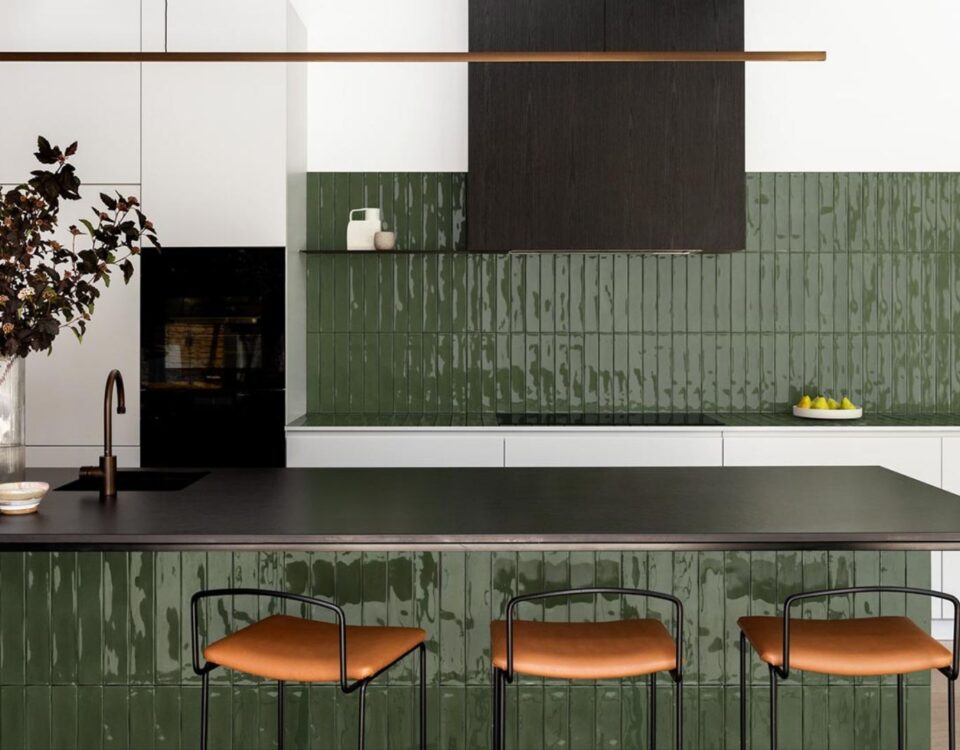
In 2026, zellige is one of the most-searched tile types in the UK, driven by social media and the growing appetite for materials with genuine human character. It is most powerful used in focused moments: a shower wall, a kitchen splashback, the area behind a basin, or a niche. Popular colourways include sage green, deep teal, aged white, warm terracotta, and blush pink. For those who love the aesthetic but want a more controlled and easier-to-install result, modern porcelain manufacturers now produce zellige-effect tiles that reference the irregular glaze and surface variation of the original.
Encaustic and cement tiles
Encaustic tiles are one of the oldest tile types still in production. Traditionally made by pressing coloured clays into a mould so that the pattern runs through the entire body of the tile (unlike a glaze, which sits on the surface), encaustic tiles develop a beautiful patina over time as the pattern wears naturally at the surface. Victorian Britain made encaustic tiles ubiquitous in hallways, churches, and civic buildings, and many original installations survive in good condition more than a century later.
Cement tiles are a related but distinct type: made from compressed cement and mineral pigments rather than fired clay, they are cured rather than kiln-fired. Both types produce the richly patterned, artisanal surfaces that are one of the most characterful tile options available. Modern encaustic-effect porcelain and ceramic tiles replicate the look with the practical advantages of a fired tile: much easier to seal, harder-wearing, and available in a wider colour range. True handmade encaustic and cement tiles remain available for those who want the genuine article and are prepared to invest in their care.
Terrazzo tiles
Terrazzo is a composite material made by embedding chips of marble, granite, quartz, or glass in a cement or resin base, then grinding and polishing the surface smooth. The result is a distinctive speckled surface with a playful, one-of-a-kind quality: no two areas of terrazzo are identical. Originally a Venetian flooring tradition dating back centuries, terrazzo has undergone a significant revival in UK interiors over the past few years and shows no sign of fading.
Real poured terrazzo is a specialist flooring installation — beautiful but expensive. Terrazzo-effect tiles in porcelain and ceramic replicate the speckled aesthetic at a fraction of the cost and are available in a wide range of colourways from subtle neutral-chip-on-white through to bold multicolour expressions. In 2026, the most popular terrazzo-effect tiles have softer, warmer backgrounds with neutral chips: a more restrained version of the look that bridges pattern and plain without overwhelming a room.
Fluted and textured tiles
Fluted tiles have a three-dimensional surface of raised parallel ridges running across the tile face. They are not a material category in themselves — fluted tiles are most commonly made from porcelain or ceramic — but they represent a distinct design category that has become one of the most prominent tile stories of 2026. The appeal is both visual and sensory: a fluted surface catches light differently throughout the day, casting subtle shadows that shift with the angle of natural and artificial light. The wall is never quite the same twice.
The broader textured tile category includes ribbed surfaces, wave effects, three-dimensional relief patterns, and sculptural raised designs. All share the quality of introducing physical depth to a surface in a way that flat tiles cannot. Textured tiles work best used on a single defined surface as a feature — a shower wall, a vanity backdrop, or a niche — rather than across an entire room, where the accumulated texture can become visually tiring.
Mosaic tiles
Mosaic tiles are small tiles — typically no larger than 50x50mm — arranged on mesh backing sheets for installation. They can be made from porcelain, ceramic, glass, natural stone, marble, or combinations of materials. The defining practical advantage of mosaic tiles is grip: the large number of grout lines relative to tile area provides significantly more surface friction underfoot than large format tiles, making mosaics a natural choice for wet room floors, shower trays, and pool surrounds where slip resistance is paramount.
Visually, mosaics can range from a uniform field in a single material and colour (clean and contemporary) through to elaborate multi-material patterns and pictorial designs (bold and decorative). Glass mosaic tiles add a reflective, light-enhancing quality to small spaces that no other tile type can replicate. Mosaics work particularly well in defined areas: a shower floor, a niche, a bath panel, a splashback border, or an outdoor pool surround.
Wood-effect tiles
Wood-effect tiles are porcelain or ceramic tiles that use high-definition digital printing and surface texturing to replicate the look and grain of timber. Modern manufacturing has made them genuinely convincing: the best examples capture the knot patterns, grain variation, and colour tones of real oak, ash, walnut, and pine with remarkable accuracy. They are produced in plank formats that mimic the proportions of real floorboards.
The practical case for wood-effect tiles over real wood is compelling in any room that sees moisture: kitchens, bathrooms, hallways, and conservatories. They are completely waterproof, scratch-resistant, require no oiling or sealing, and can be used where real wood would be at serious risk. The warmth and character they bring to a space is something stone-effect and concrete-effect tiles cannot match, making them the right choice anywhere the primary design goal is creating a cosy, domestic atmosphere rather than a spa-like or architectural one.
Quarry tiles
Quarry tiles are unglazed tiles made from natural clay or shale, extruded and fired at high temperatures. Despite the name, they are not quarried from stone — the term derives from the French “carré” meaning square. They have been used in British homes for centuries and are particularly associated with farmhouses, Victorian kitchens, country cottages, and traditional boot rooms. Their characteristically warm terracotta and red-brown tones, naturally textured surface, and robust durability make them one of the most sympathetic flooring choices for period and rural properties.
Quarry tiles are naturally slip-resistant, hard-wearing, and develop a handsome patina over time. They must be sealed to prevent staining and benefit from occasional re-sealing. They conduct heat well and are suitable for underfloor heating. Original quarry tiles in period homes are worth restoring rather than replacing wherever possible.
Large format and slab tiles
Large format tiles are not a separate material — they are porcelain or ceramic tiles produced in dimensions of 600mm and above on one side, up to the enormous Coverlam slabs of 3.6m x 1.2m that La Fabrico stocks exclusively in Devon. They are significant enough as a distinct design and practical category to warrant their own entry here.
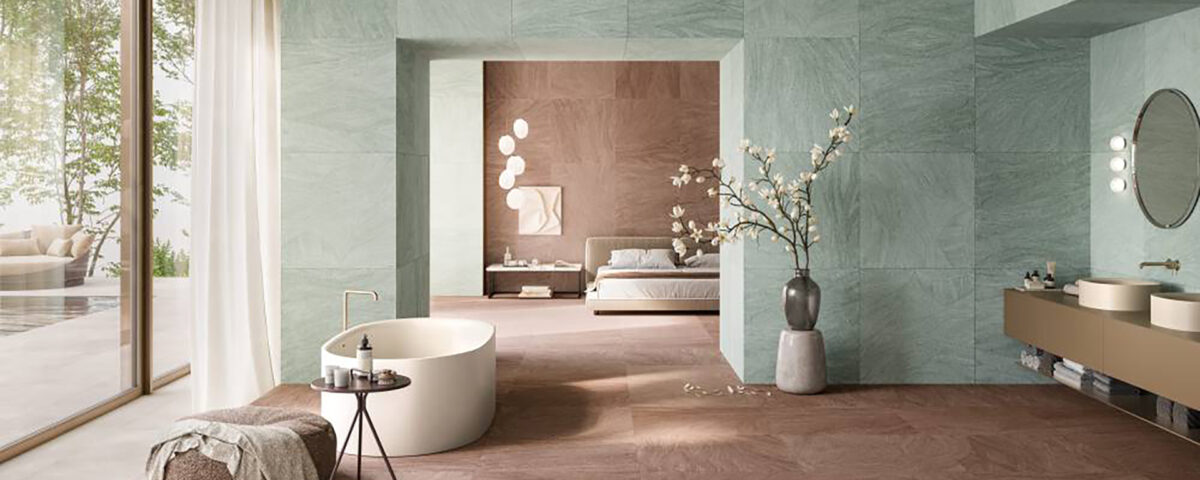
The principal advantage of large format tiles is fewer grout lines, which creates a calmer, more expansive visual field and a much easier surface to keep clean. Large format tiles in a large format stone-effect or concrete-effect design are the defining element of contemporary bathroom and kitchen design in 2026. They require a perfectly flat substrate, full-bed adhesive application, a levelling system, and an experienced installer — but when installed correctly, they deliver a result that smaller tiles simply cannot match.
Metro and brick tiles
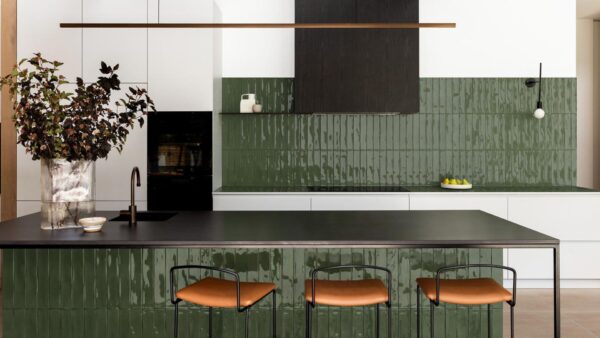
Metro tiles — the small rectangular glazed ceramic tiles originally used in the Paris Metro system and New York subway — became one of the most widely used wall tiles in UK homes during the 2010s. Their clean lines, glossy finish, and versatility made them a reliable default for kitchen splashbacks and bathroom walls across a huge range of budgets and styles. In 2026 the plain white metro tile has lost ground to more characterful alternatives, but the format itself remains entirely valid when used in more considered colourways: sage green, warm terracotta, deep teal, dusty pink, and warm off-white all give the metro format a contemporary relevance it lacks in plain white.
Brick tiles are a related format — thinner and lighter than real bricks but designed to replicate the look of exposed brickwork on walls. Available in porcelain, ceramic, and occasionally real fired clay, they work well in industrial-style kitchens, bar areas, and feature walls where a raw, textured surface is the design goal.
Quick Reference
Which tile type suits which room?
Already know which room you are tiling? Use this table to find the right tile type quickly, along with the key practical requirement for each application:
| Room | Best tile types | Key requirement | Avoid |
|---|---|---|---|
| Bathroom floor | Porcelain, natural stone (sealed), terrazzo, mosaic | Minimum R10 slip rating, water resistance | Polished finishes on floors, unsealed natural stone |
| Bathroom walls | Porcelain, ceramic, zellige, fluted, metro, natural stone | Water resistance, easy to clean | Unsealed natural stone in steam-heavy areas |
| Shower floor | Mosaic, textured porcelain, small-format stone | Minimum R11, epoxy grout in wet areas | Large format tiles (difficult to fall to drain), polished finishes |
| Shower walls | Large format porcelain, fluted tiles (feature), natural stone (sealed) | Minimal grout lines reduce cleaning. Full waterproofing behind tiles | Very textured tiles that trap soap residue |
| Kitchen floor | Porcelain, wood-effect porcelain, terrazzo, quarry, encaustic-effect | R10 minimum, PEI 4+, matte or textured finish | High-gloss or polished finishes, wall tiles on floors |
| Kitchen splashback | Ceramic, zellige, metro (coloured), large format slab, porcelain | Heat resistance near hob, stain-resistant grout | Cement tiles near hob (absorbent), unsealed natural stone |
| Hallway | Porcelain, natural stone, encaustic-effect, quarry, wood-effect | PEI 4–5 for heavy traffic. Darker tones hide dirt | Light-coloured soft tiles that show scuffs quickly |
| Living room | Large format porcelain, wood-effect, natural stone, terrazzo | Warmth underfoot with UFH. Large format looks best | Very small formats — creates a busy visual field in large rooms |
| Cloakroom | Any type — zellige, encaustic, terrazzo, metro, mosaic | Small area suits bolder choices. Ideal room to experiment | Nothing — the cloakroom is the one place to take a risk |
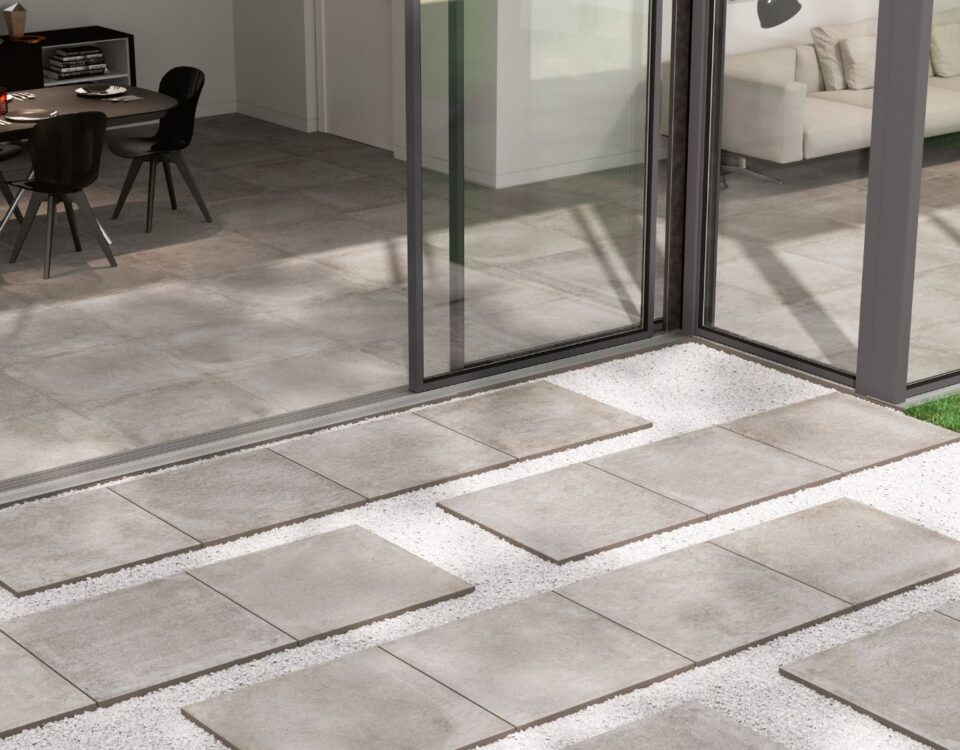
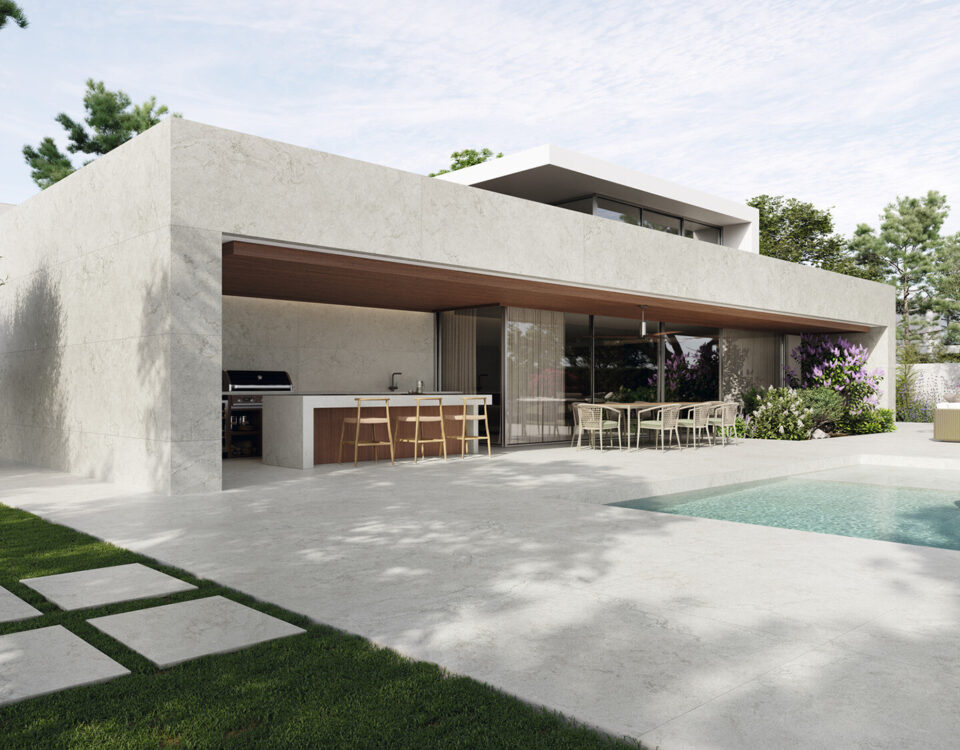
| Outdoor / patio | Porcelain 20mm (Coverlam), natural stone (sealed), quarry | R11 minimum, water absorption under 0.5%, frost-proof | Indoor tiles outdoors, ceramic, polished finishes on floors |
Room by Room
The right tile for every room in the home
Here is a more detailed guide to the tile priorities and best choices for each specific room:
Bathroom
- Porcelain is the most practical choice for both floor and walls
- Large format (600x1200mm+) on walls creates the spa look most people want
- Use a textured R10+ version on the floor for safety
- Zellige or fluted tiles work brilliantly as a single feature wall
- Natural stone is stunning but needs sealing and careful product choices
- Mosaic on shower floors adds grip and visual interest simultaneously
Kitchen
- Porcelain floor tiles rated PEI 4+ in a matte finish are the safest choice
- Stone-effect, wood-effect, concrete-effect and terrazzo all work well
- Splashback is the place for character: zellige, coloured metro, or a large slab
- Always use stain-resistant or epoxy grout near the hob
- Match floor and splashback tones — vary finish and format rather than colour
- Quarry and encaustic-effect tiles suit farmhouse and country kitchens beautifully
Hallway
- Durability is paramount — choose PEI 4 or 5 for high-traffic areas
- Encaustic-effect, terrazzo, and stone-effect porcelain all work well
- Mid-tones hide dirt and wear better than very light or very dark tiles
- Quarry tiles are the natural choice for farmhouse and period properties
- A patterned tile in the hallway makes a strong first impression for relatively little cost
- Large format keeps the space feeling open; smaller patterned tiles add character
Cloakroom
- The smallest room with the most design freedom — be bold
- Zellige, encaustic, terrazzo, and mosaic all suit the small scale
- Floor-to-ceiling tiles in a single tile type feel luxurious in a compact space
- A strongly patterned or richly coloured tile that would overwhelm a large room works perfectly here
- The cloakroom is the room in the home where you can most afford to experiment
Living room and open plan
- Large format porcelain creates the most sophisticated result
- Wood-effect tiles bring warmth that stone-effect cannot match in living areas
- Natural stone adds luxury but needs sealing and careful furniture protection
- Consider continuing the same tile through to kitchen and hallway for cohesion
- Underfloor heating pairs perfectly with porcelain — plan substrate depth early
Outdoor patio and terrace
- Only use tiles specifically rated for outdoor use: R11 minimum, under 0.5% water absorption
- Grespania Coverlam 20mm is the gold standard for UK outdoor tile
- Stone-effect, concrete-effect, and wood-effect are all available in outdoor spec
- Match to your indoor tile for a seamless indoor-outdoor flow if doors open onto the space
- Allow for drainage falls and use frost-proof flexible jointing compound
Getting the Detail Right
The decisions that matter as much as the tile itself
Finish: the most overlooked decision
The finish of a tile affects both how it looks and how it performs. Gloss and polished finishes reflect light and look striking on walls, but show every watermark and footprint, and are dangerously slippery when wet on floors. Matte and honed finishes are far more forgiving in daily use, hide wear better, and are safer underfoot. Textured and grip finishes provide the best slip resistance for shower floors and outdoor surfaces. As a general rule: gloss on walls, matte on floors.
Grout: the detail most people get wrong
Grout has more impact on the finished appearance of a tiled surface than most homeowners expect. Contrasting grout emphasises every tile joint and creates a visible grid across the whole surface. Matching grout creates a calmer, more continuous result — the modern preference in almost every application. The standard advice is to choose a grout one shade darker than your tile rather than trying to match exactly. And for kitchen splashbacks and wet areas, always use a stain-resistant or epoxy grout: standard cement grout will yellow and stain over time near a hob or in a shower, regardless of how well it is initially sealed.
Format: bigger is almost always better
Larger tiles create fewer grout lines, which makes rooms feel calmer and larger and is considerably easier to keep clean. The trend towards large format tiles is not arbitrary: it reflects a genuine visual and practical improvement in most applications. The smallest format that makes sense for a given application is usually 300x300mm; for most contemporary bathrooms and kitchens, 600x600mm is the practical minimum and 600x1200mm or larger is the modern standard.
Order samples before you order tiles. Every tile looks different in your specific space under your specific lighting than it does in a showroom or on a screen. Take samples home, place them on the floor and against the walls, photograph them at different times of day, and live with them for a couple of days before committing. Our team at La Fabrico will happily provide samples of anything in our range — this is the most reliable way to make a final decision you will be satisfied with for years.
See every tile type in Devon’s largest showroom
At La Fabrico in Exeter we stock porcelain, ceramic, zellige, encaustic, terrazzo, natural stone, mosaic, fluted, wood-effect, and the full Grespania Coverlam range — all displayed in real room settings across our showroom floor. Our team can help you identify the right tile type for every room in your home, choose finishes, match grout tones, and calculate quantities. Free samples available on everything. Guaranteed Best Prices.
lafabrico.com | 01392 848487 | Marsh Barton, Exeter EX2 8QX